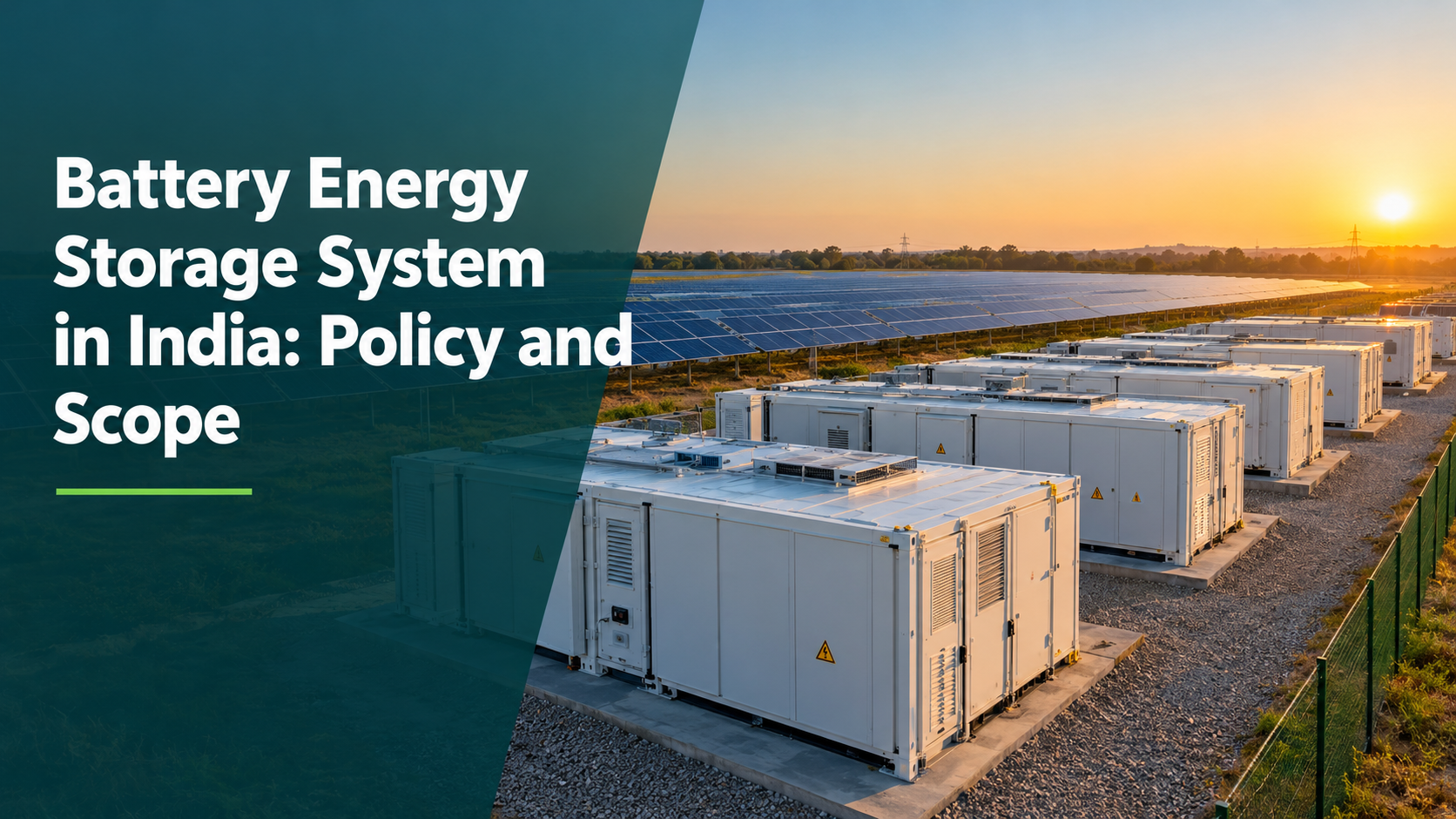
India's battery storage market will show a significant boost in performance in 2026 due to the increase in the country's solar and wind capacity, growing demand for electricity from companies, positive government policy, and quick development of lithium-ion technology.
Now, India is making quick headway toward the increase in the country's renewable energy capacity thanks to the construction of wind and solar farms; however, the production of energy is variable due to weather conditions and the time of day. It leads to the fact that energy storage has become one of the key factors in providing a stable and flexible supply of energy.
In this regard, the battery storage market of India has become one of the key segments of energy transformation in the country. Thus, in 2026, the development of the renewable energy sector and increasing demand for electricity, along with the development of technologies and government support, will make the business segment grow.
Why Is Battery Storage Important for India?
Battery Energy Storage Systems (BESS) provide the possibility to store electricity when generation is high and to release it in case of a rise in demand for electricity. Therefore, this technology is particularly useful in managing the fluctuations of renewable energy production.
Energy storage can assist in:
- Integration of renewable energy into the energy system
- Peak demand management
- Balancing of the energy grid
- Providing backup energy sources
- Energy relocation
- Enhancing reliability of electricity supply
The above-mentioned functions allow energy storage in India to go beyond the boundaries of backup power provision.
Key Drivers of India's Battery Storage Market
There are certain conditions that will drive the market development in 2026.
1. Expansion of Renewable Energy
One of the major developments in the energy storage sector is the expanding solar and wind capacity in India. Solar generation is generally highest during the day, when electricity demand is at its peak in the evening.
The gap can be minimised through the utilisation of battery storage, which can be used in the following ways:
- Storing additional solar energy
- Providing electricity during peak hours
- Decreasing the use of traditional resources
- Enhancing the efficiency of electricity generation
As more and more production of electricity from renewable sources takes place, the demand for storage will surely grow.
2. Rise of Commercial and Industrial Demand
Businesses are also turning to storage solutions to manage electricity costs more effectively. Energy storage for commercial and industrial purposes enables savings on peak demand charges, provides reliable backup, supports renewable energy sourcing, reduces dependence on grid power, and adds stability for demanding operations. This creates real opportunities for battery use across offices, manufacturing plants, and warehouses.
An often overlooked segment here is material handling and logistics, where forklift and traction batteries are steadily replacing older lead-acid systems for their lower maintenance and faster charging cycles.
Growth of the Li-Ion Battery Market in India
Lithium-ion technology is an important element of energy storage due to its high energy density and fast response speed.
The Li-ion battery market in India is developing in different areas, such as:
- Renewable energy storage
- Electric mobility
- Backup generation
- Telecom infrastructure
- Commercial storage
- Utility batteries
Developments in battery technologies also help to meet urgent needs, for example, safety requirements, lifecycle, thermal management, etc.
Government Support for Energy Storage
There are certain government policies and investments that can significantly help in developing the market for energy storage in India. Due to the inclusion of renewable sources of energy into the Indian energy mix, the development of certain policies in the sphere of storage can facilitate the feasibility of such projects and ensure the efficient use of energy storage technologies.
The development of the following key policy elements may prove useful:
- Energy storage technologies (battery technologies)
- Integration with renewables
- Power grid flexibility
- Manufacture of batteries domestically
- Procurement of energy storage technologies
- Financial support of energy storage projects
The favorable policy framework will attract private investments and encourage the use of storage technologies on a large scale.
Role of Lithium-Ion Manufacturers
The development of the battery industry depends on the emergence of reliable domestic manufacturing infrastructure.
Lithium-ion producers are expected to play an important role in fulfilling the requirements of the growing Indian market for advanced batteries. They will not focus only on capacity but also on:
- Safety of batteries
- Quality of cells
- Thermal management
- Length of cycles
- Cost efficiency
- Battery recycling and disposal
.The generation of domestic capabilities can improve India’s position in the battery value chain and will minimise dependence on foreign technologies.
Role of Battery Storage in Energy Management
With an increase in battery applications, efficient batteries will become indispensable for commercial purposes. Battery storage will allow storing electricity during surplus and supplying it during shortages, hence ensuring that there is management of both demand and supply of electricity. It will also make the integration of renewable energy possible, as the battery will allow storing energy from sources like the sun and supply it during low energy production.
Waaree Technologies provides Battery Energy Storage Solutions for commercial energy storage, power plants, street lighting systems, and so forth.
What Is In Store for the Future Market in 2026?
The battery storage market in India is expected to move towards higher usage of renewables and higher demand for electricity.
Below are some relevant trends to consider:
- Higher integration of BESS with renewable power generation.
- Increased use of battery storage technology by commercial and industrial customers.
- Further advances in lithium-ion batteries.
- More production of battery storage technologies within India.
- Increased consideration of grid flexibility and energy management.
All of the above make battery storage increasingly important for India.
Conclusion
The energy storage market in India is experiencing a very active phase of its development. Growth of renewable energy, increasing electricity demand, government backing, and the development of battery technologies form a favourable background for more utilisation of storage solutions in India in the future.
The growing Li-ion battery market in India and the development of local lithium-ion manufacturers are also likely to reinforce India’s energy storage ecosystem, as companies and energy companies will be searching for more flexible and reliable energy sources in the near future.
FAQs
- 1. What Is Driving India's Battery Storage Market?
The typical payback period depends on electricity pricing, system cost, utilization, battery size, and operating conditions.
- 2. Why Is Battery Storage Important for Renewable Energy?
Incorporating solar enhances battery ROI as companies consume more renewable power when there is less solar generation by using stored power.
- 3. Why Is the Li-Ion Battery Market Growing in India?
Yes. Batteries can deliver benefits in terms of peak shaving, time-shifting, and backup even without solar.
- 4. What Is the Role of Lithium-Ion Manufacturers?
The battery capacity may decrease over its lifetime due to usage and wear and tear. The financial modelling should reflect that as opposed to constant capacity throughout the lifetime.
- 5. What Is the Outlook for India's Energy Storage Market in 2026?
In 2026, the Indian energy storage market will likely undergo further development, influenced by increased renewable energy capacity and commercial applications.

Calculating ROI on a Commercial BESS Investment: A Practical Framework
Previous Blog




Blog Comment Form